
Mahjong
 Mortal Kombat
 On On Dash
 Basketball Superstars
 garten of banban
 Block Blast
 fortune cookie
 Geometry Dash Bloodbath
 Geometry Dash Spam
 Geometry Dash Lite
 Geometry Dash Breeze
 Geometry Dash Meltdown
 Geometry Arrow
 Geometry Dash Subzero
 Geometry Dash World
 Geometry Dash 3D
 Geometry Vibes
 Geometry Jump 2
 Geometry Dash Scratch
 Geometry Jump
 Basket Random
 Geometry Dash
 Google Snake
 Rodeo Stampede
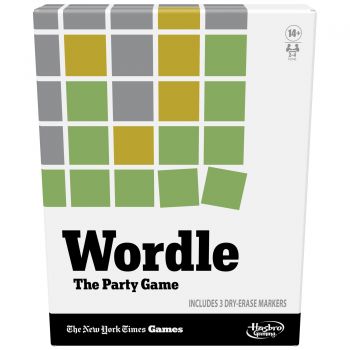 Wordle
 Marble Run 3d
 Happy Wheels
 Slope
 Escape The Backrooms
 Tap Road
 Pyramid Solitaire
 Slope Ball
 Happy Glass
 The Loopler
 How To Fish
 Level Devil
 Ludo King
 undertale
 Snake 3d
 slime rancher
 poppy playtime chapter 5
 sonic the hedgehog
 Worming from Home
 commandos
 silent hill
 Helix Jump
Discover the Classic Tile Puzzle
Mahjong offers a timeless puzzle experience that has captured the interest of players for many years. The game presents a layout of stacked tiles, each bearing a distinct design. The objective is to clear the board by pairing identical tiles that are free to move. A tile is considered free when no other tile blocks its left or right side and there is no tile on top of it. By removing matching pairs, the player gradually uncovers new tiles and works toward a completely cleared board.
Understanding the Tile Layout
Recognising Tile Types
The tiles in Mahjong are divided into several families. The most common families include the circle set, the bamboo set, the character set, the wind set and the dragon set. Each family contains a range of numbers or symbols that repeat across the set. Recognising the visual patterns of each family helps the player locate potential matches quickly.
Identifying Free Tiles
A free tile must have an open side on both the left and the right. In addition the tile must not have another tile stacked directly above it. When scanning the board, look first at the outer edges where tiles are often free. Then move inward to uncover hidden matches as the game progresses.
Practical Strategies for Success
Effective play relies on a combination of observation and planning. Begin each session by surveying the entire layout. Mark mentally which families appear most frequently in the outer layers. Prioritise removing tiles that reveal new free tiles in deeper layers. This approach creates additional options and reduces the chance of reaching a dead end.
When multiple matching pairs are available, choose the pair that opens the greatest number of new tiles. In many situations, removing a tile from the top of a stack will expose several hidden tiles at once. This cascading effect often leads to a smoother clearing process.
Patience is essential. Rushing to click on the first visible pair can close off future possibilities. Take a moment to consider the impact of each move before committing.
Guidance for New Players
For those new to Mahjong, start with simpler layouts that contain fewer stacked layers. These layouts provide a gentle introduction to the concept of free tiles and matching pairs. As confidence grows, progress to more complex arrangements that challenge spatial reasoning.
Practice the habit of scanning the board from left to right and top to bottom. This systematic approach ensures that no potential match is overlooked. Additionally, keep an eye on the remaining tiles of each family. If a particular family has an odd number of tiles left, it may indicate a future obstacle that requires careful planning.
Remember that the game does not penalise mistakes with a time limit. Take the time needed to think through each decision. Over time the player will develop an intuitive sense for which moves lead to the most efficient clearing path.
Common Questions About Mahjong
What is the best way to avoid getting stuck?
Focus on uncovering tiles in the deepest layers early in the game. By creating space in the lower levels, the player maintains a larger pool of options and reduces the likelihood of a dead end.
Can the game be played on mobile devices?
Yes the tile puzzle is available on many platforms including mobile devices. The touch interface allows players to tap on free tiles to select matching pairs.
How many different tile families are there?
The classic set includes the circle, bamboo, character, wind and dragon families. Each family contains a range of numbers or symbols that repeat across the set.
Is there a limit to the number of attempts?
No there is no limit on attempts. Players may restart a layout as many times as desired in order to improve their strategy.
Do I need to memorize tile positions?
Memorisation is not required but it can be helpful. Recognising where specific families are located can speed up the decision making process.